Branner
SEO for the AI-First Web
SEO for the AI-First Web
Generate more leads from AI answers .
Generate more leads from AI answers .
AI Search is Changing How Customers Find You
AI Search is Changing How Customers Find You
AI assistants are reshaping how customers discover products. From ChatGPT to Google’s AI Overviews, people now get answers directly—often without ever visiting your site. If your brand isn’t mentioned, you’re invisible.
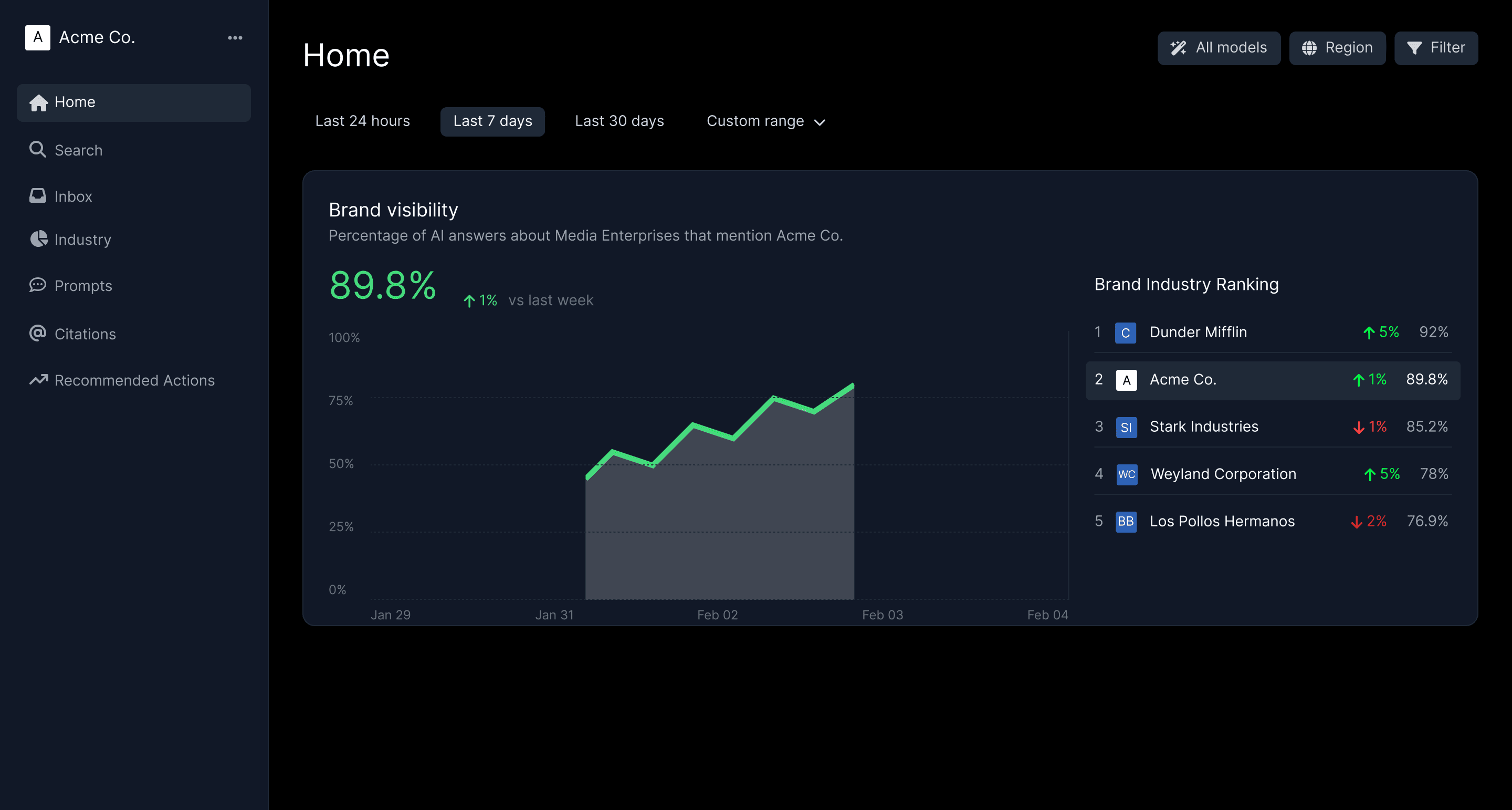

Monitor AI Visibility
Monitor AI Visibility
See if your brand is included in AI answers and where you're missing out.
See if your brand is included in AI answers and where you're missing out.
Beat Your Competitors
Beat Your Competitors
Benchmark rivals and get clear steps to improve your ranking in AI responses.

Measure Actual Traffic
Measure Actual Traffic
Track actual traffic from AI assistants and prove ROI.
Track actual traffic from AI assistants and prove ROI.
“65% of people already use AI tools like ChatGPT to search.”
“65% of people already use AI tools like ChatGPT to search.”
McKinsey 2024
Frequently Asked Questions
Frequently Asked Questions
Why is traditional SEO not enough?
Traditional SEO focuses on ranking in search engine results pages (SERPs), but AI assistants and chat-based searches often bypass these entirely. Instead of showing 10 blue links, they generate a single, synthesized answer. To stay visible, you need to ensure your content is structured and written in a way that AI models can parse, understand, and choose to surface in their responses.
How do LLMs choose what websites to reference in their AI responses?
Large language models (LLMs) are trained on vast datasets that include public web content. When generating answers, they tend to prefer sources that are well-structured, clear, and commonly referenced across the web. High-quality content, strong semantic relevance, and recognized authority all increase the likelihood that your website’s information will be reflected in AI-generated responses.
How do you know what prompts my prospective customers are searching?
We use a combination of AI prompt data, keyword research, and industry-specific insights to identify the kinds of questions your audience is likely to ask AI assistants. By analyzing trends and real user language, we can help you align your content with the specific questions customers are asking.
How is AI search traffic different from Google Search traffic?
AI-generated answers often consolidate information from multiple sources and don’t always link back to websites the same way search engines do. While traditional SEO drives clicks through search rankings, AI search visibility is about ensuring your content is included in the answers users see—even if they never click a link.
How quickly will I see results from AI optimization?
Results vary depending on your industry, content quality, and competition. Some improvements can be seen in a few weeks as content is updated and re-indexed, while full benefits often take a few months. We typically work with clients on an ongoing basis to continually monitor and adapt to changing AI models.
How do you keep up with changes in AI models and algorithms?
We monitor updates from major AI providers and track how responses evolve over time. Our team continually analyzes prompt trends, user behavior, and AI outputs to ensure your content stays aligned with what models are looking for.
Why is traditional SEO not enough?
Traditional SEO focuses on ranking in search engine results pages (SERPs), but AI assistants and chat-based searches often bypass these entirely. Instead of showing 10 blue links, they generate a single, synthesized answer. To stay visible, you need to ensure your content is structured and written in a way that AI models can parse, understand, and choose to surface in their responses.
How do LLMs choose what websites to reference in their AI responses?
Large language models (LLMs) are trained on vast datasets that include public web content. When generating answers, they tend to prefer sources that are well-structured, clear, and commonly referenced across the web. High-quality content, strong semantic relevance, and recognized authority all increase the likelihood that your website’s information will be reflected in AI-generated responses.
How do you know what prompts my prospective customers are searching?
We use a combination of AI prompt data, keyword research, and industry-specific insights to identify the kinds of questions your audience is likely to ask AI assistants. By analyzing trends and real user language, we can help you align your content with the specific questions customers are asking.
How is AI search traffic different from Google Search traffic?
AI-generated answers often consolidate information from multiple sources and don’t always link back to websites the same way search engines do. While traditional SEO drives clicks through search rankings, AI search visibility is about ensuring your content is included in the answers users see—even if they never click a link.
How quickly will I see results from AI optimization?
Results vary depending on your industry, content quality, and competition. Some improvements can be seen in a few weeks as content is updated and re-indexed, while full benefits often take a few months. We typically work with clients on an ongoing basis to continually monitor and adapt to changing AI models.
How do you keep up with changes in AI models and algorithms?
We monitor updates from major AI providers and track how responses evolve over time. Our team continually analyzes prompt trends, user behavior, and AI outputs to ensure your content stays aligned with what models are looking for.
Why is traditional SEO not enough?
Traditional SEO focuses on ranking in search engine results pages (SERPs), but AI assistants and chat-based searches often bypass these entirely. Instead of showing 10 blue links, they generate a single, synthesized answer. To stay visible, you need to ensure your content is structured and written in a way that AI models can parse, understand, and choose to surface in their responses.
How do LLMs choose what websites to reference in their AI responses?
Large language models (LLMs) are trained on vast datasets that include public web content. When generating answers, they tend to prefer sources that are well-structured, clear, and commonly referenced across the web. High-quality content, strong semantic relevance, and recognized authority all increase the likelihood that your website’s information will be reflected in AI-generated responses.
How do you know what prompts my prospective customers are searching?
We use a combination of AI prompt data, keyword research, and industry-specific insights to identify the kinds of questions your audience is likely to ask AI assistants. By analyzing trends and real user language, we can help you align your content with the specific questions customers are asking.
How is AI search traffic different from Google Search traffic?
AI-generated answers often consolidate information from multiple sources and don’t always link back to websites the same way search engines do. While traditional SEO drives clicks through search rankings, AI search visibility is about ensuring your content is included in the answers users see—even if they never click a link.
How quickly will I see results from AI optimization?
Results vary depending on your industry, content quality, and competition. Some improvements can be seen in a few weeks as content is updated and re-indexed, while full benefits often take a few months. We typically work with clients on an ongoing basis to continually monitor and adapt to changing AI models.
How do you keep up with changes in AI models and algorithms?
We monitor updates from major AI providers and track how responses evolve over time. Our team continually analyzes prompt trends, user behavior, and AI outputs to ensure your content stays aligned with what models are looking for.
Team with Exceptional Experience
Team with Exceptional Experience